
It’s been a while since I’ve written a low-tech To the Point, but I came across something this week that reminded me of this simple, effective tool I used to tote to every inspection.
I analyzed a lot of low-speed collisions earlier in my career, and I remember sitting in the break room in 2007 reading this spanking new SAE paper by Bryce Anderson et al., which discussed using powdered guide coat to enhance visibility of subtle damage. If you haven't heard of it, guide coat is a fine black powder you wipe on a surface to make abrasions, cracks, and impressions more apparent.
I carried 3M’s version for years. If I saw some faint damage on a light-colored vehicle (the dark stuff works best on light paint), I’d apply some guide coat to see if anything extra popped out. It works well on minor abrasions and, every so often, reveals some key evidence, like a pattern of abrasions from license plate contact. Here’s an example of bumper-to-bumper contact from Anderson's study.
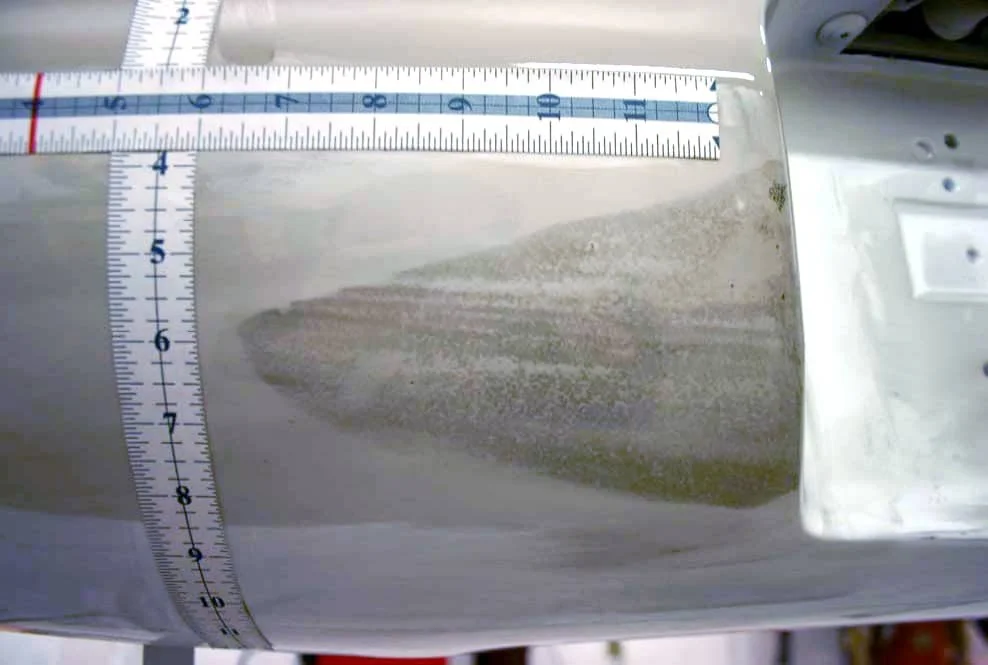
The powdered stuff washes off easily, unlike the sprays. 3M's version is a bit expensive ($142 at Grainger), but there are a few on eBay right now for ~$50, and Amazon has knock-offs for even less. It’s nice to have in the kit if you’re on the hunt for subtle damage.
Thanks for reading, keep exploring!
Lou Peck
P.S. If you have any native Lytx files (.DCE) or Seon bus videos (.AVS, .EDR, .ARV, or .AVR) you’re able to share, please let me know. We’re adding support for all to vPrism and could use more samples for testing.