
How Accurate Is an Exemplar Calibration?
Calibrating exemplar cameras is routine in high-end photogrammetry work for recons. You get photos of roadway evidence you want to map, or dashcam video from a car you want to track, but access to the subject camera isn’t viable. So, an exemplar of the same make and model is calibrated, and those parameters are applied to the subject imagery.
But how much do calibration parameters vary between cameras of the same make and model? And how does that affect measurements?
A fleet of 16 Nikon Coolpix S33s I have laying around the office (used in our live photogrammetry course), offered a great opportunity to explore this. We calibrated all of them using PhotoModeler’s three-foot, 144-dot grid and a whole heap of photos.
Figure 01 shows the average pixel shift from lens distortion across the sensor. Figure 02 shows the standard deviation, or how much those magnitudes vary between cameras.
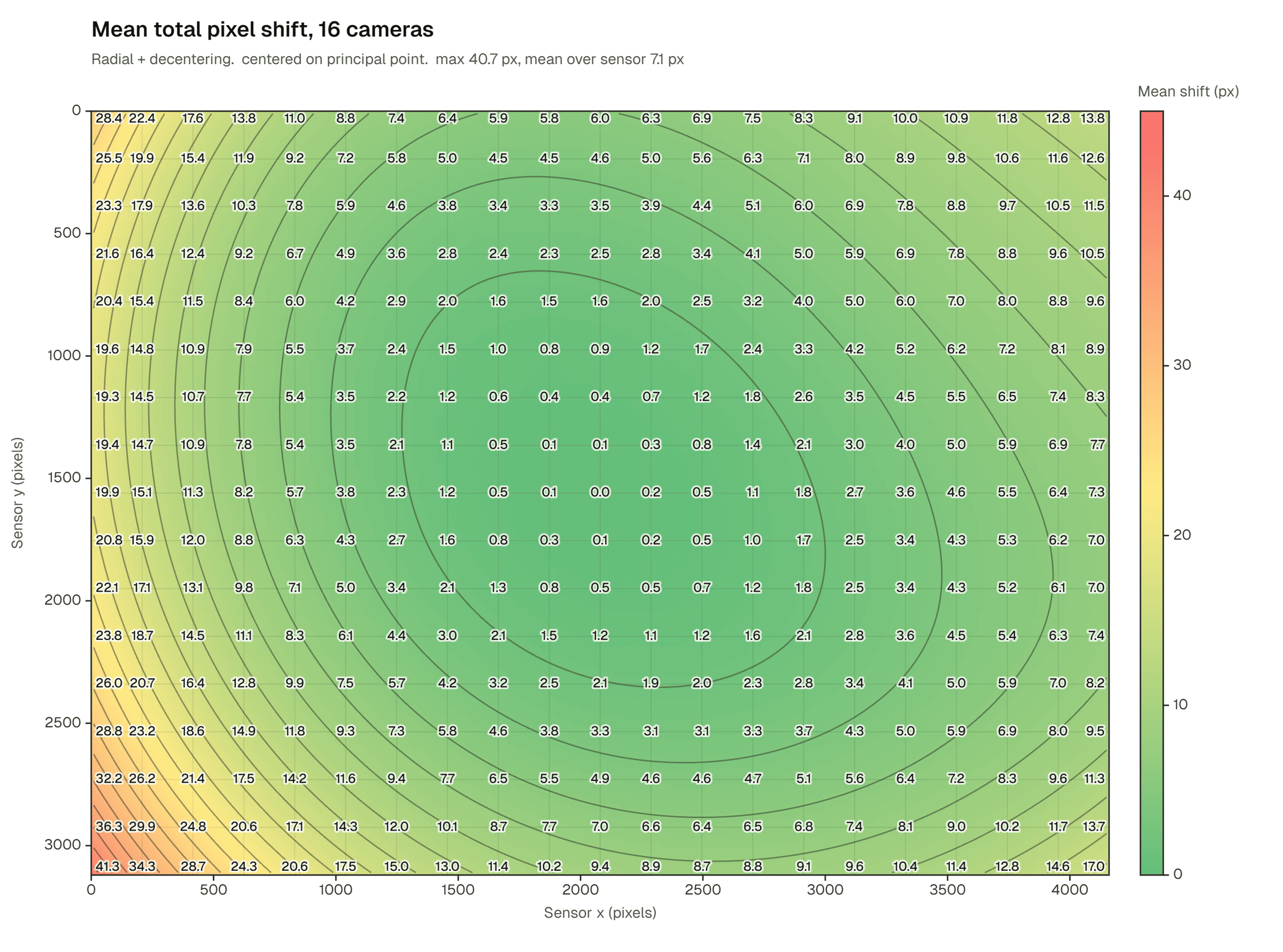
Figure 01: Mean total pixel shift.
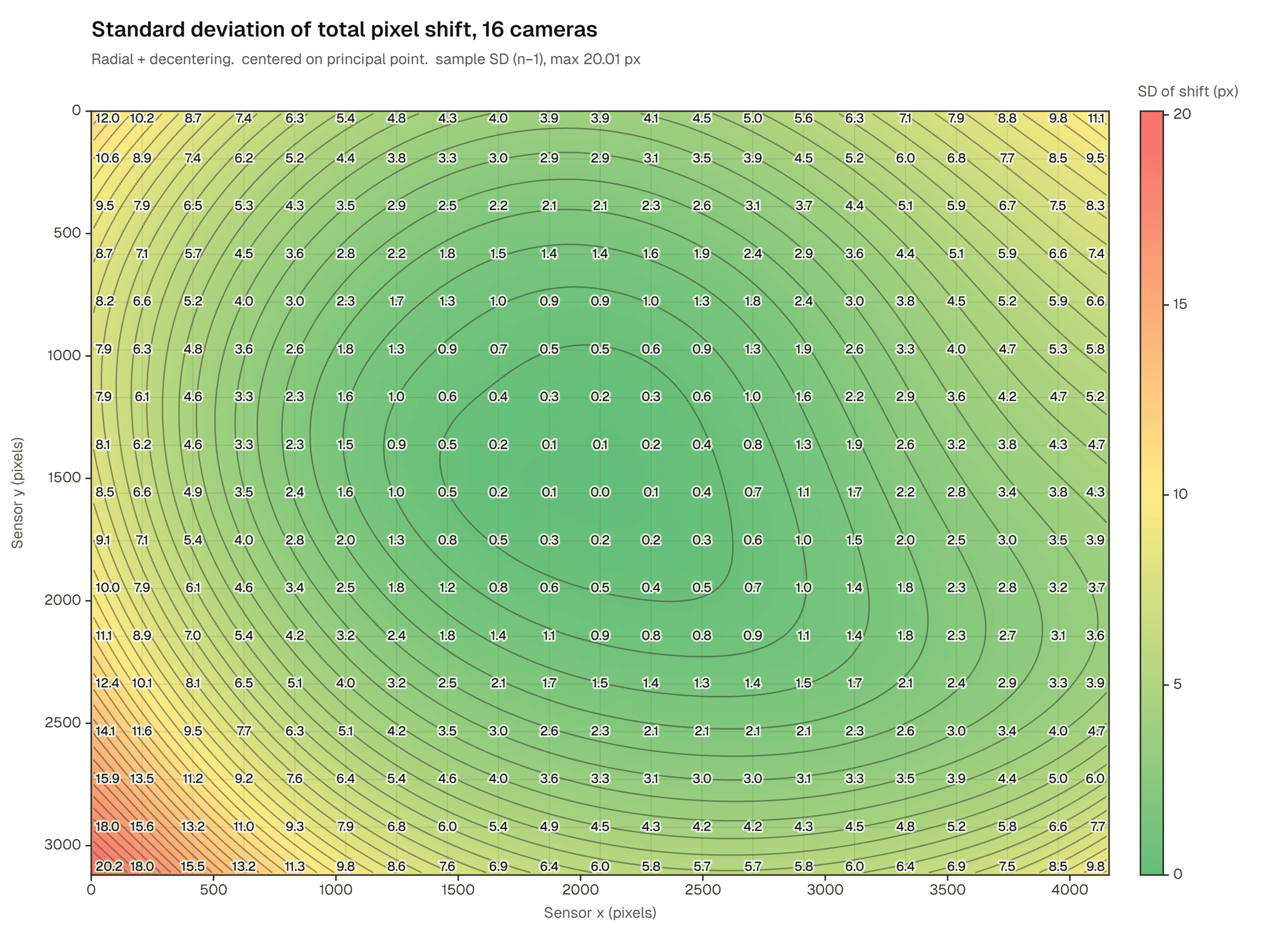
Figure 02: Standard deviation of total pixel shift.
Near the middle of the frame, the standard deviation is comforting ~0 to 3 pixels. However, in the lower-left corner, it reaches ~20 pixels. That’s also where the average shift is largest, about 41 pixels. For this group of S33s, that’s the corner I’d be most cautious about when using an exemplar calibration.
But what about real-world measurement error? So far, we're finding that applying an average calibration produces total measurement errors of 300 to 1,000 ppm (0.03 to 0.1%) compared to the true geometry. That’s about 0.1 to 0.4 inches on a 30-foot measurement. Generally, that's plenty good for my work!
An average calibration isn’t the same as a single exemplar’s calibration, so there’s more comparison to do. But these results are promising and consistent with my day-to-day experience.
Thanks for reading, keep exploring!
Lou Peck